

We’ve officially entered what I’m calling “MA mode” – leaving behind the weird gimmicky M acronyms and diving into the proper alphabetical M’s. Episode 98 brought an eclectic mix that swung wildly from futuristic combat racing to one of the most unexpectedly delightful hidden gems I’ve encountered in this entire journey. This batch had everything: Nintendo’s ambitious early attempts at vehicular combat, post-apocalyptic movie tie-ins that captured the wasteland vibes better than expected, espionage adventures that rewarded patient players, puzzle head-scratchers, and a dart game that absolutely nobody saw coming. This was genuinely one of the stronger episodes in recent memory, with four out of five games earning our approval.
The episode delivered hit after hit with only one stumble. We kicked things off with Nintendo’s forward-thinking Mach Rider, found ourselves pleasantly surprised by a maligned Mad Max adaptation, appreciated the ambitious complexity of Mafat Conspiracy, hit a speed bump with the forgettable Magic Blocks, before Magic Darts swooped in to save the day with its bizarre charm and surprisingly solid gameplay mechanics. Sometimes the best discoveries come from ignoring conventional wisdom and just playing the games yourself.
Mach Rider – 1/1
| Genre | Release | Developer | Publisher |
| Motorcycle Racing | 1986 | Nintendo | Nintendo |
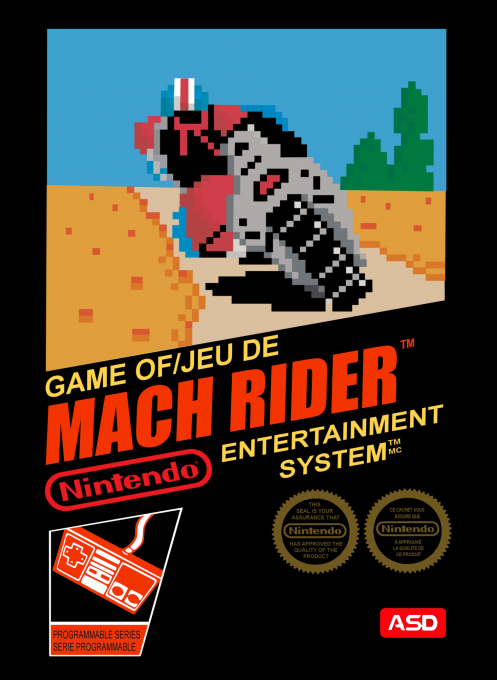
Mach Rider represents Nintendo’s ambitious attempt at combining futuristic combat racing with manual transmission mechanics and creative tools. Set in the far-flung year of 2112 – a date that actually impressed me since most games of this era lazily settled for “20-something” – this Nintendo-published title throws you onto a post-apocalyptic highway armed with a gun and a gear shift.
The game offers multiple modes including Fighting Course, Endurance Course, and a track builder option that lets you design your own courses. The Fighting Course mode tasks you with destroying enemy vehicles and obstacles within a time limit, while Endurance Course focuses purely on distance racing. The manual transmission system, which requires you to shift up and down using the D-pad, adds a layer of complexity that was typical of 80s game design philosophy. As my Jake aptly noted, “This is the 80s. Everything was manual.”
The core gameplay loop involves navigating treacherous highways littered with oil slicks, enemy vehicles, and barrel obstacles while managing your fuel supply. I found the turning mechanics particularly challenging, commenting that “the turns are quite awkward” and noting how “you can’t see where you’re going on the turn.” The perspective shifts dramatically during turns, making it difficult to anticipate what obstacles lie ahead. Despite these frustrations, the game has ambition and interesting ideas. The track builder mode was particularly intriguing – though as my guest wisely pointed out, “That’s fun only if you can save your tracks. If you just make a track and then turn off the track is not the point.”
One clever touch is the rearview mirror which actually functions. The game also features a bullet management system that adds strategic depth to the combat. What struck me most was how this “felt like an Outrun with like kind of a Mad Max vibe” – fitting, given our next game. Despite its awkward turning mechanics, we both gave it a 1, with me noting “That’s a fine racing game. And it’s got, you know, mechanics.”
Mad Max – 1/1
| Genre | Release | Developer | Publisher |
| Vehicular Action | 1991 | Gray Matter | Mindscape |
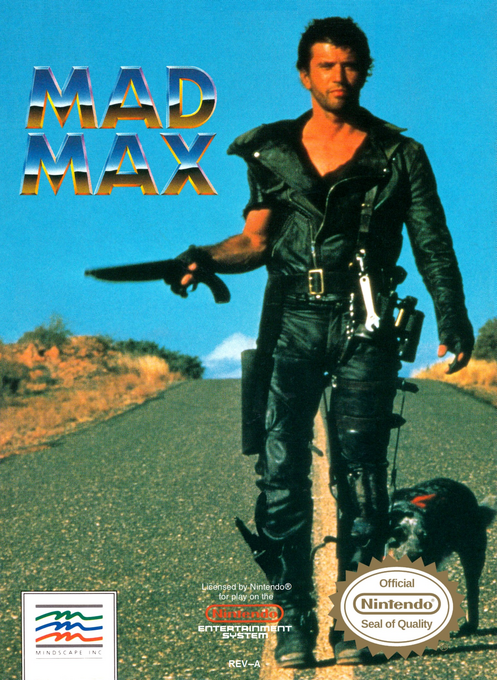
Speaking of Mad Max vibes, we moved directly into the actual licensed game based on the classic post-apocalyptic film series. Jake was “probably a bigger Mad Max fan than me in that I’ve at least seen the movies,” which actually set the stage for us to appreciate this Mindscape release more than most.
Yes, Mad Max on the NES is confusing. We’ll freely admit that. The gameplay isn’t immediately intuitive, and we definitely didn’t read the manual or seek out any context before diving in. But here’s the thing – despite the initial confusion, this game actually captures the gritty wasteland vibes of the films remarkably well. The top-down action, the desolate environments, the sense of desperate survival in a harsh post-apocalyptic world – it’s all there once you start to figure out what you’re doing.
The general online consensus seems to be that this game is bad, but we’re happy to be outliers on this one. There’s something compelling about the challenge of navigating this harsh world, even if the game doesn’t hold your hand. The atmosphere is right, and once you start understanding the mechanics, there’s genuine enjoyment to be found. It may not be perfect, but it succeeds in translating the Mad Max experience to the NES in ways that matter. We both gave it a 1, finding enough to appreciate in its gritty, unforgiving approach to post-apocalyptic survival.
Mafat Conspiracy – 1/1
| Genre | Release | Developer | Publisher |
| Spy Action | 1990 | Aimcom | Vic Tokai |
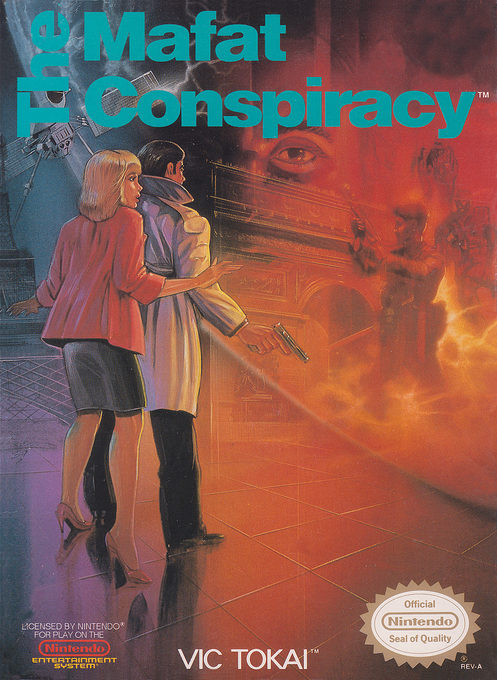
Also known as “Golgo 13: Episode II” in some regions, Mafat Conspiracy is a sequel to the well-received Golgo 13: Top Secret Episode. Published by Vic Tokai, this espionage action game attempts to blend multiple gameplay styles including side-scrolling shooting, first-person maze navigation, and even helicopter sequences.
The game casts you as the professional assassin Duke Togo (Golgo 13) on a mission to prevent a conspiracy. While the ambitious mix of gameplay styles could have fallen flat, we found ourselves appreciating what Vic Tokai was trying to accomplish here. Yes, it’s complex and switches between different modes frequently, but that variety is part of what makes it interesting. The side-scrolling segments have their own rhythm, and the first-person maze sections add a layer of tension and exploration that breaks up the action.
Mafat Conspiracy doesn’t hold your hand, and it demands patience to understand its different systems. But for players willing to engage with it on its own terms, there’s a solid espionage adventure here. The game has ambition in spades, and while not every element is perfectly polished, the overall package works. We both gave it a 1, finding enough depth and variety to appreciate Vic Tokai’s efforts to create something more complex than a standard action game.
Magic Blocks – 0/1
| Genre | Release | Developer | Publisher |
| Puzzle | 1991 | Mega Soft | NTDEC |
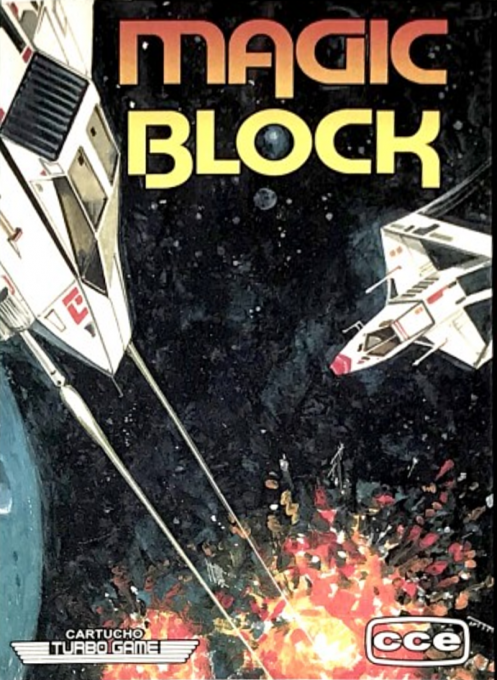
Magic Blocks is a puzzle game developed by —- that, despite its name, has absolutely nothing magical about it. Released late in the NES’s lifespan, this is a sliding puzzle game that requires quick reactions rather than the thoughtful block-dropping gameplay the title might suggest. You manipulate blocks by sliding them around the playfield, and the game demands speed and reflexes to succeed.
What makes Magic Blocks particularly confusing is the complete disconnect between its name, its gameplay, and its presentation. There’s no fantasy theme whatsoever – in fact, the box art inexplicably features space ships, which makes absolutely no sense given what you actually do in the game. It’s as if the marketing department and the development team never communicated with each other.
The sliding puzzle mechanics are serviceable, and the quick-reaction element adds some challenge, but Magic Blocks simply doesn’t do enough to stand out in an already crowded puzzle game market. The NES library is packed with excellent puzzle games, from Tetris to Dr. Mario, and Magic Blocks doesn’t offer compelling enough mechanics or presentation to compete. The bizarre mismatch between title, theme, and gameplay only adds to the sense that this is a game that didn’t quite know what it wanted to be.
Magic Darts – 1/1
| Genre | Release | Developer | Publisher |
| Darts Simulation | 1991 | SETA | Romstar |
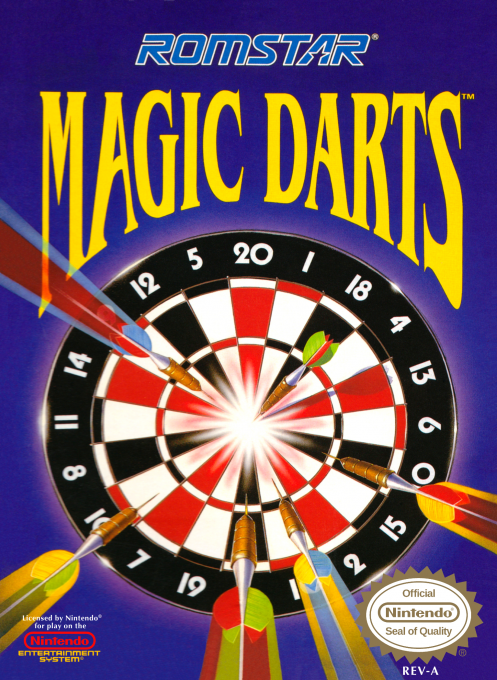
And then came Magic Darts, the surprise hidden gem that nobody saw coming. Published by Romstar in 1991, this dart simulation game absolutely charmed us with its bizarre character roster, solid mechanics, and surprising depth. What could have been a simple, forgettable sports simulation instead became one of the most entertaining experiences I’ve had in recent episodes.
The game features an eclectic cast of characters including Sue, an “expert female” player; Rom the robot; Lee Kung (a “culturally insensitive” ninja); Max the macho man; and even a monkey. There is also a secret creep character activated by putting in the name “Sex” for some reason.
The dart-throwing mechanics utilize a three-stage system that brilliantly captures the challenge of real darts. First, you adjust your power. Then you control left-right accuracy. Finally, you set your angle. As I discovered during gameplay, “you aim and then the accuracy of your shot left and right” with each stage requiring precision timing. My guest noted how “you have heavy, so you want the most power, I think” when selecting throw strength. The system creates genuine tension and skill expression, making each throw feel meaningful.
The absurdist character design absolutely makes this game. Beyond the normal human players, you have a literal robot whose arm extends illegally beyond the throwing line (as we noticed on the box art), a monkey, and that secret character. The manual even labels some characters as “expert male” and “expert female,” leading me to joke, “I’ve trained my whole life at being male.” The character select screen features wildly inconsistent art styles that somehow add to the charm rather than detracting from it.
I gushed, “If you don’t have a dart board, this might be a pretty good alternative for you, cuz this is as realistic as playing real darts. Come come at me if you disagree. Look how many different vectors of stuff you got to go through. I love it.” The game achieves that rare feat of being both silly and mechanically sound. As Jake concluded, “I think the character wackiness does it sets it off cuz it is magic darts and you have to do something. You can be a robot.”
“No one’s ever heard of this. No one’s ever spoken a word about this game,” I noted. Perfect hidden gem.
Episode 98 proved to be one of the stronger showings in recent memory, with four out of five games earning our stamp of approval. We started with the respectable but flawed Mach Rider, found ourselves going against the grain with both Mad Max and Mafat Conspiracy (games that deserve more credit than conventional wisdom gives them), hit our only real disappointment with Magic Blocks, and emerged victorious with Magic Darts stealing the show as a legitimate hidden gem. The journey from 2112’s futuristic highways to a gritty post-apocalyptic wasteland to espionage missions to a dart tournament featuring robots and secret pervert characters encapsulates everything I love about this project – the unexpected discoveries and contrarian opinions that make diving deep into gaming history worthwhile.
As we approach episode 100, I’m reminded why this alphabetical journey matters. Games like Magic Darts, Mad Max, and Mafat Conspiracy exist in obscurity or under clouds of negative reception, never given their fair shake because of limited marketing or because early critics formed snap judgments. The NES library is full of these hidden quality experiences, and that’s what makes documenting every single one of them – with fresh eyes and no preconceptions – so valuable. Sometimes the best way to evaluate a game is simply to play it yourself.
Next time on NES AtoZ 99, we’re staying in the magic zone with more mystical titles. And then we’ll need to figure out how to celebrate episode 100 properly – cupcakes or donuts, we haven’t decided yet. But one thing’s certain: if episode 100 is half as strong as episode 98 turned out to be, it’ll be worth celebrating.


Leave a Reply
Want to join the discussion?Feel free to contribute!